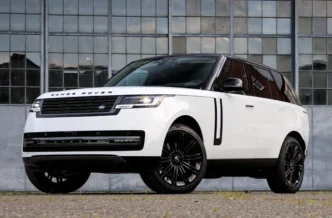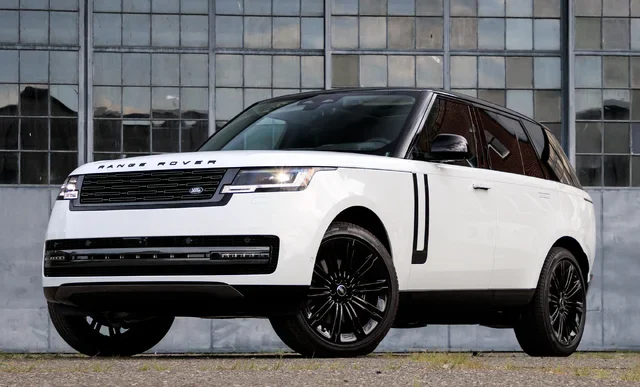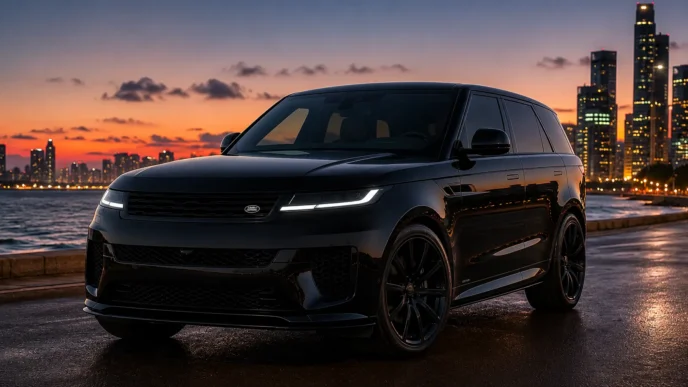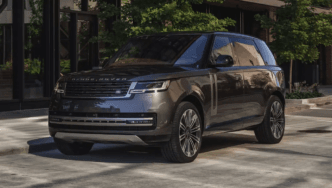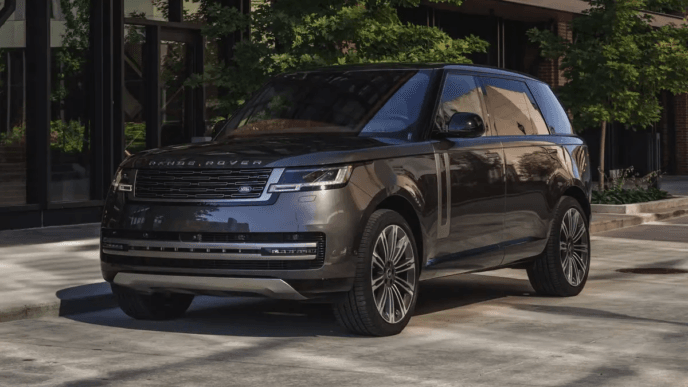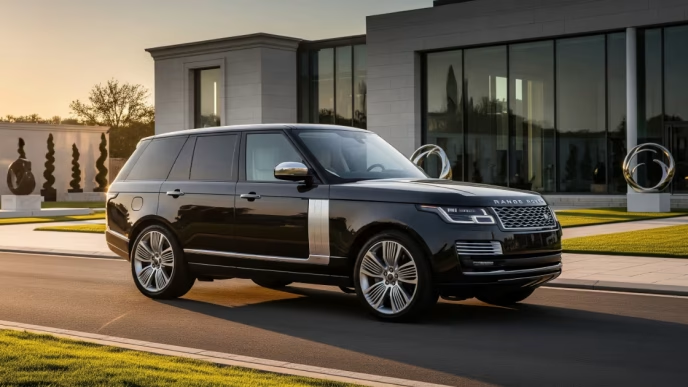





The news isn’t what most people wanted—but I don’t think it’s all bad
When I first read that the Range Rover Electric delayed Sri Lanka conversation was heating up again, I wasn’t surprised. Jaguar Land Rover has quietly pushed back the launch of its first fully electric Range Rover more than once. What was originally expected in late 2025 has slipped into 2026, and there is still uncertainty about exactly when customers will finally receive it. Despite that, more than 77,000 people worldwide have already joined the waiting list.
Most headlines make this sound like terrible news.
Personally, I see it differently.
If you live in Sri Lanka, this delay could actually save you from making an expensive decision too early. That might sound strange coming from someone who loves Range Rovers as much as I do, but sometimes waiting isn’t losing—it’s buying smarter.
In this article, I’ll explain what really happened, why I believe the delay makes sense for Sri Lankan buyers, whether you should consider the current Plug-in Hybrid models instead, and what I would honestly do if I were spending my own money today.
Stick with me—by the end of this, you might actually be relieved.
So What Actually Happened With the Range Rover Electric?
Jaguar Land Rover has spent years preparing the company’s first fully electric Range Rover. Expectations were huge. The vehicle promised to deliver everything buyers love about the traditional Range Rover while producing zero tailpipe emissions.
The original launch timeline pointed toward late 2025.
Then things changed.
The launch moved into 2026, and reports now suggest that production timelines remain flexible while engineers continue refining the vehicle. According to industry reporting from publications including Autocar India, JLR wants additional validation before releasing its flagship electric SUV to customers.
Honestly, I respect that decision.
Building an electric luxury SUV isn’t just about replacing a petrol engine with batteries. Everything changes from software and battery cooling to off-road performance, charging speeds, suspension tuning, and long-term reliability.
There is another important reason.
The global EV market has slowed compared with the rapid growth manufacturers expected a few years ago. Customer demand remains strong, but many buyers have become more cautious about pricing, charging infrastructure, and resale values.
Despite the delay, interest hasn’t disappeared. JLR says more than 77,000 customers have already registered their interest in the Range Rover Electric.
That’s impressive.
It also creates enormous pressure to get the product right the first time.
No luxury brand wants early buyers becoming software testers.
Why This Delay Actually Makes Sense for Sri Lanka
This is where my opinion differs from many people online.
If you asked me whether I wanted the Range Rover Electric tomorrow, my answer would be simple.
As a car enthusiast? Yes.
As a Sri Lankan buyer spending well over Rs. 147 million?
Probably not.
Here’s why.
Our charging infrastructure still needs time
Electric vehicles are becoming more common in Sri Lanka, but we’re still building the infrastructure needed to support premium luxury EV ownership.
Drive around Colombo, and you’ll find charging options becoming easier every year.
Take a trip along the Colombo–Kandy Expressway, however, and the situation changes quickly. DC fast chargers remain limited compared with mature EV markets.
That’s not criticism.
It’s simply reality.
Imagine spending over one hundred million rupees on a luxury SUV only to plan every long-distance journey around charger availability.
Aiyo…that removes part of what makes a Range Rover special.
The beauty of owning one has always been freedom.
You shouldn’t lose that freedom because charging stations are still catching up.
Import duties remain unpredictable
Anyone who has followed Sri Lanka’s vehicle market knows one thing.
Tax policies change.
Import regulations change.
Pricing changes.
Nobody can confidently predict what the final tax structure for premium electric SUVs will look like several months from now.
Buying the very first batch of an entirely new electric flagship while the duty framework continues evolving introduces unnecessary financial uncertainty.
For buyers investing around Rs. 147 million or more, those unknowns matter.
Personally, I’d rather wait until the market becomes more stable than rush into something that could cost significantly more—or depreciate differently—than expected.
First-generation vehicles always teach manufacturers lessons
I’ve followed Range Rover launches for years.
One pattern repeats itself.
The earliest production models almost always receive software updates, small improvements, and refinements after customers begin driving them.
That’s normal across the automotive industry.
Electric vehicles rely heavily on software.
Battery management.
Power delivery.
Charging optimisation.
Navigation systems.
Driver assistance features.
All of these improve over time.
By delaying the launch, JLR has more opportunity to eliminate bugs before customers ever experience them.
As buyers, we benefit.
Sometimes patience is cheaper than repairs.
The PHEV already solves most daily driving
This might surprise some readers.
The current Range Rover P460e and P550e Plug-in Hybrid models already cover around 90 kilometres of electric driving under ideal conditions.
Think about your average weekday.
Driving through Galle Road.
Picking up the kids.
Heading to the office.
Running errands.
Returning home.
For many Colombo families, that entire day fits comfortably inside the electric range.
Then, when you decide to visit Kandy, Galle, or even head towards the hill country for the weekend, the petrol engine takes over automatically.
No charging anxiety.
No route planning.
No compromises.
For Sri Lanka today, that’s incredibly practical.
What Should Sri Lankan Buyers Do Right Now?
People often ask me one simple question.
“Should I wait?”
Here’s my honest answer.
Option One: Buy the Plug-in Hybrid
If you’re planning to purchase a luxury SUV within the next year, I think the Plug-in Hybrid deserves serious consideration.
Models available through Access Motors offer an excellent balance between electric driving and traditional Range Rover capability.
You enjoy silent city driving while keeping the confidence to travel anywhere across Sri Lanka without worrying about charging stations.
That’s a combination that suits our roads remarkably well.
Option Two: Stay on the waitlist
If your heart is completely set on the fully electric model, don’t panic.
Stay on the waiting list.
Keep following official updates.
Just don’t organise your financial plans around a launch date that has already changed more than once.
Manufacturing schedules evolve.
Markets change.
It’s better to remain flexible than disappointed.
Option Three: Wait for the second wave
If you don’t urgently need a new vehicle, I actually think waiting until 2027 could be the smartest decision.
By then, you’ll likely see:
- Better software
- Improved charging networks
- More real-world owner feedback
- Potential battery improvements
- A clearer tax environment in Sri Lanka
Buying slightly later sometimes delivers the better ownership experience.
The Range Rover PHEV — The Unsung Hero Right Now
Everyone is talking about the upcoming electric Range Rover.
Meanwhile, I think the current Plug-in Hybrid is quietly becoming one of the smartest luxury SUVs available.
Here’s why.
The P460e and P550e provide genuine electric commuting without asking buyers to completely depend on charging infrastructure.
For someone living around Colombo, daily driving can often happen almost entirely on electric power.
Weekend road trip to Galle?
The petrol engine handles it effortlessly.
Heading to Nuwara Eliya?
No charging worries.
Planning a family holiday in the south?
Just drive.
That flexibility matters.
I’ve also noticed that Sri Lankan luxury buyers have increasingly shown interest in hybrid models because they balance performance, fuel efficiency, and taxation more effectively than large V8 engines.
Of course, there is one important downside.
The price.
Let’s not pretend otherwise.
The Plug-in Hybrid is still an expensive vehicle, and ownership costs remain significant.
If your budget is already stretched, waiting could still be the better financial decision.
Luxury should never become financial stress.
My Honest Verdict — Is the Delay Good or Bad?
I’ll be honest.
If you’re a lifelong Range Rover enthusiast, this delay hurts.
Waiting is frustrating.
Watching launch dates move isn’t exciting.
I completely understand why some buyers feel disappointed.
But I also think context matters.
For buyers in countries with mature charging infrastructure, predictable government policies, and thousands of public chargers, delaying the launch feels like lost time.
Sri Lanka isn’t there yet.
We’re improving.
We’re moving in the right direction.
But we’re not fully prepared for widespread ownership of ultra-premium electric SUVs.
That doesn’t mean electric vehicles aren’t the future.
They absolutely are.
It simply means the timing has to match the market.
In my opinion, this delay protects Sri Lankan buyers more than it disappoints them.
Sometimes the smartest luxury purchase is the one you don’t rush into.
Conclusion
The headlines focus on delays. I think they miss the bigger picture.
Yes, the Range Rover Electric delayed Sri Lanka story is disappointing if you’ve been eagerly waiting for the first fully electric flagship. Nobody enjoys seeing launch dates pushed back. Yet when I look at Sri Lanka’s charging network, import policies, ownership costs, and real driving conditions, I honestly believe buyers are better off receiving a more refined vehicle rather than an unfinished one.
If you’re planning to own a Range Rover soon, my recommendation is simple. Take a serious look at the current Plug-in Hybrid models if they fit your budget, or stay on the electric waitlist without rushing your decision. Either choice is smarter than buying purely because of hype.
The future of Range Rover is undoubtedly electric. I have no doubt about that.
I just think Sri Lanka deserves to receive it at the right time—not simply the earliest possible time.
Frequently Asked Questions (FAQ)
Why is the Range Rover Electric launch delayed?
Jaguar Land Rover has delayed the Range Rover Electric to allow for additional testing, software refinement, and production readiness. The company is also responding to changing global EV demand while ensuring its first fully electric Range Rover meets the brand’s high quality standards.
Is the Range Rover Electric coming to Sri Lanka?
Yes. The Range Rover Electric is expected to arrive in Sri Lanka after its global launch. However, the exact availability will depend on local import regulations, allocation, and the official launch schedule through the authorized distributor.
Should I wait for the Range Rover Electric or buy the PHEV now in Sri Lanka?
If you need a luxury SUV today, the Range Rover Plug-in Hybrid (P460e or P550e) is the more practical choice. It offers up to around 90 km of electric driving for daily commutes while retaining a petrol engine for longer journeys across Sri Lanka.
How much will the Range Rover Electric cost in Sri Lanka?
Official Sri Lankan pricing has not been announced. Based on current luxury vehicle taxes and import duties, industry estimates suggest the Range Rover Electric could cost around Rs. 147 million or more, depending on the final specification and government tax policies.
Is Sri Lanka ready for the Range Rover Electric in terms of charging infrastructure?
Sri Lanka’s charging network continues to grow, especially around Colombo, but nationwide fast-charging infrastructure is still developing. Buyers who frequently travel long distances may currently find a Plug-in Hybrid to be a more convenient option.