




Range Rover vehicles offer a mix of luxury, performance, comfort, and off-road capability. However, maintaining a used Range Rover can be expensive when mechanical or electronic problems are missed.
The faults to look for depend on the model, engine, year, mileage, and maintenance history. A Range Rover Vogue may need different checks from an Evoque or Velar. Even two vehicles from the same generation can have different issues.
For Sri Lankan buyers, a proper inspection is especially useful before purchasing an imported or previously owned vehicle. This guide covers common areas to check across the main Range Rover models and explains what to look for before buying.
Common Range Rover Problems to Check
Some problems appear across multiple Range Rover generations, although their frequency and causes vary.
1. Air suspension faults
Air suspension is fitted to many Range Rover and Range Rover Sport models, as well as selected versions of other models. It provides a comfortable ride and allows the vehicle’s ride height to change.
Over time, air springs, air lines, valves, sensors, or the compressor may develop faults.
Warning signs include:
- One corner of the vehicle sitting lower than the others.
- The vehicle lowering after being parked overnight.
- Suspension warning messages on the dashboard.
- The compressor running frequently or for unusually long periods.
- A harsh ride or difficulty changing ride height.
Not every Range Rover has air suspension, so confirm the equipment fitted to the specific vehicle. A mechanic should inspect the system and check for stored fault codes before recommending replacement parts.
2. Engine cooling system problems
Cooling system faults can lead to expensive engine damage if they are ignored. Depending on the engine and model year, possible problem areas include coolant hoses, pipes, pumps, radiators, thermostats, and other cooling components.
Land Rover’s technical service information documents coolant-low warnings and multiple potential coolant leak paths on specified engine and model combinations. This does not mean every vehicle listed has the same defect or will develop a leak. The exact vehicle specification matters. See the technical service information.
Check for:
- Coolant levels that repeatedly fall.
- Coolant residue or visible leaks.
- A temperature gauge rising above its normal range.
- Coolant warning messages.
- An unusual smell after driving.
A workshop should pressure-test the cooling system when appropriate and identify the source of any leak. Do not rely on topping up coolant as a permanent repair.
3. Transmission and drivetrain concerns
Range Rover vehicles use different transmissions and drivetrains depending on their generation and engine. Problems can result from wear, poor maintenance, leaks, or faults in associated components.
During a test drive, look for delayed engagement when selecting Drive or Reverse, harsh gear changes, shuddering, unusual noises, or drivetrain warning messages.
A specialist should check the transmission, transfer case, differentials, and related components where fitted. Ask for service records and a diagnostic scan. A smooth short test drive alone does not prove that the drivetrain is in good condition.
4. Electrical and infotainment faults
Modern Range Rovers contain numerous electronic control modules, sensors, cameras, driver-assistance features, and infotainment functions. A fault may involve a component, wiring, a battery, software, or communication between systems.
Check the touchscreen, climate control, parking sensors, cameras, electric seats, windows, tailgate, lighting, and dashboard warnings.
If several unrelated warnings appear together, have the battery and charging system checked alongside a full diagnostic scan. Avoid replacing expensive modules before the cause has been identified.
5. Suspension, steering, and brakes
Worn suspension bushes, joints, steering components, shock absorbers, tyres, and brakes can affect ride quality and handling. These parts are also important to inspect on older and high-mileage vehicles.
Look for knocking noises over bumps, uneven tyre wear, steering vibration, excessive play, brake judder, or the vehicle pulling to one side.
UK MOT data for the Range Rover includes suspension joints and bushes, brakes, tyres, and steering-related items among recorded failure areas. This is useful as a guide to inspection points, but it is not a reliability ranking for Sri Lankan vehicles. Review the generation and MOT data.
Range Rover Problems by Model
1. Range Rover Vogue (Full-Size Range Rover)
The Vogue name is used for certain full-size Range Rover specifications in some markets. The model generation, engine, and equipment should be confirmed before assessing likely faults.
Range Rover L322 (2002–2012)
Older L322 vehicles require careful checks for age-related wear and maintenance problems.
Areas to inspect include:
- Air suspension: Check for uneven ride height, compressor problems, and leaks if the vehicle has air suspension.
- Cooling system: Inspect pipes, hoses, the radiator, and other cooling components for leaks or previous repairs.
- Engine and drivetrain: Check for oil leaks, abnormal noises, rough running, and evidence of poor servicing.
- Transmission and transfer case: Test for smooth gear changes and unusual drivetrain noises.
- Brakes and suspension: Inspect bushes, joints, steering components, brake condition, and tyres.
- Electrical equipment: Test all major features and scan for stored fault codes.
Engine-specific concerns matter on this generation. For example, technical service information documented a coolant-pipe leak issue on certain earlier 5.0-litre V8 vehicles. Applicability depends on the engine and vehicle identification details, so it should not be assumed to affect every L322. Read the service information.
Range Rover L405 (2013–2022)
The L405 introduced a newer design and more electronic systems. A pre-purchase inspection should cover both mechanical condition and vehicle electronics.
Pay attention to:
- Air suspension operation and ride height, where fitted.
- Coolant loss and signs of previous overheating.
- Engine leaks, abnormal noises, and service history.
- Transmission operation and drivetrain condition.
- Infotainment, cameras, parking sensors, and electrical accessories.
- Steering, brakes, suspension, and tyre wear.
Certain L405 engine and model-year combinations are included in Land Rover technical service information concerning coolant-low warnings. A technician should confirm whether the specific vehicle falls within the relevant application and investigate any warning properly.
Newer Range Rover (L460, 2022 onwards)
Newer vehicles feature more advanced electronics and, depending on specification, mild-hybrid or other powertrain technologies.
Check for warning messages, software-related concerns, cooling system leaks, unusual drivetrain behaviour, and incomplete service or repair records. Have the vehicle scanned with suitable diagnostic equipment and confirm whether outstanding recalls or service actions apply to its VIN.
2. Range Rover Sport
The Range Rover Sport combines luxury with a more dynamic driving character. Its equipment and powertrain vary considerably across generations.
Range Rover Sport L320 (2005–2013)
On older examples, focus on the condition of the suspension, brakes, cooling system, engine, and drivetrain.
Inspect air suspension where fitted, check for leaks and abnormal noises, and confirm that the parking brake works correctly. During the test drive, look for harsh gear changes, steering vibration, brake judder, and suspension knocks.
The engine type matters. A petrol V8 and a diesel model do not share every potential fault, so an inspection should follow the specific engine’s known service requirements.
Range Rover Sport L494 (2013–2022)
The L494 uses a range of engines and equipment, meaning the checks should be matched to the exact vehicle.
Inspect the cooling system, air suspension where fitted, transmission, brakes, steering, and electronic functions. Check for coolant loss and warning messages, especially when the vehicle has a documented history of cooling-system repairs.
Land Rover technical service information includes certain L494 vehicles with specified 3.0-litre Ingenium six-cylinder engines in guidance about coolant-low warnings. This is not proof of a fault on every L494. Confirm the engine and model year before applying the information.
Newer Range Rover Sport (L461, 2023 onwards)
On newer models, check the electronic systems, driver-assistance features, infotainment, charging systems where applicable, and all available service records.
A warning light should not be dismissed simply because the vehicle drives normally. Obtain a diagnostic report and verify any outstanding recall or service action with a Land Rover service provider.
3. Range Rover Evoque
The Evoque offers a smaller body than the full-size Range Rover and Sport. Its compact design does not remove the need for careful mechanical checks.
First-generation Evoque (L538, 2011–2018)
Inspect the engine, cooling system, transmission, electrical equipment, suspension, and air conditioning.
During the test drive, check for hesitation, rough running, warning lights, abnormal noises, and irregular gear changes. Review maintenance records carefully, especially if the vehicle has high mileage or a limited service history.
Do not assume every Evoque has air suspension. Confirm the actual specification of the vehicle.
Second-generation Evoque (L551, 2019 onwards)
Newer Evoques include more electronic features and different powertrain options, depending on market and specification.
Test the infotainment system, cameras, parking sensors, climate control, and driver-assistance features. Check for engine or hybrid-system warnings where applicable and ensure that all charging equipment is present and functioning on plug-in hybrid versions.
A specialist diagnostic scan is advisable before purchase, especially if dashboard warnings have appeared or the vehicle has undergone recent repairs.
4. Range Rover Velar (2017 onwards)
The Velar features a modern interior and a technology-focused design. Its electronic systems deserve close attention during an inspection.
Check the infotainment displays, climate control, cameras, sensors, electric tailgate, seats, and other powered features. Test them more than once during the inspection to identify intermittent problems.
Also inspect the cooling system, engine, transmission, tyres, brakes, and suspension. Air suspension is specification-dependent, so verify whether it is fitted before checking its operation.
Land Rover’s technical service information includes selected Velar models with specified 3.0-litre Ingenium six-cylinder engines in guidance about coolant-low warnings. Any suspected coolant leak should be diagnosed rather than treated by repeatedly topping up the reservoir.
What Sri Lankan Buyers Should Check Before Purchasing
A used Range Rover should be assessed based on its actual condition, not just its mileage, appearance, or advertised features.
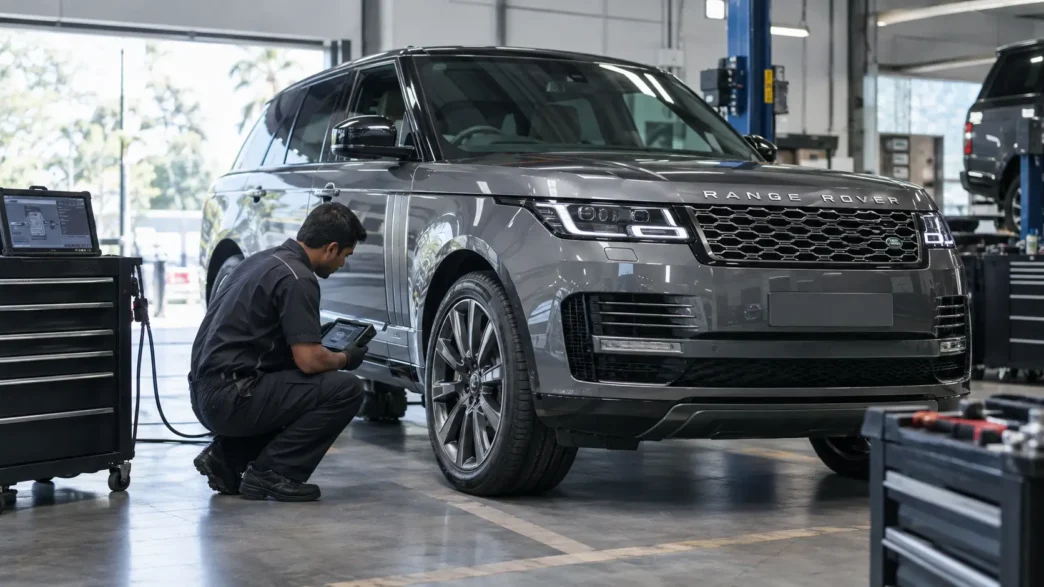
Before paying a deposit, arrange an independent inspection by a workshop experienced with Land Rover vehicles.
Use this checklist:
- Service history: Check invoices, maintenance records, and evidence of previous major repairs.
- Diagnostic scan: Request a scan using suitable equipment and ask for an explanation of stored fault codes.
- Cooling system: Check coolant levels, leaks, and signs of overheating or previous repairs.
- Suspension: Confirm the type fitted and test its operation.
- Transmission and drivetrain: Test the vehicle when cold and warm, where practical.
- Electrical features: Test the infotainment system, cameras, sensors, climate control, windows, and seats.
- Tyres and brakes: Check wear patterns, tyre condition, braking performance, and suspension noises.
- Body and underbody: Look for accident repairs, corrosion, fluid leaks, and damage.
- Vehicle identity: Match the VIN and documentation, and check import and registration records.
- Parts and maintenance: Ask the workshop about parts availability, expected maintenance, and any repairs likely to be needed soon.
Sri Lankan driving conditions differ by route and use. Frequent stop-start driving, rough roads, heavy traffic, and long periods in hot weather can affect vehicle use and maintenance needs. These conditions do not automatically cause a particular Range Rover fault, but they make checking cooling performance, suspension, tyres, and service history worthwhile.
Before buying, request a written inspection report and an estimate for any recommended repairs. This helps you understand the likely ownership costs instead of relying only on the purchase price.
Final Advice
Range Rover ownership can be rewarding when the vehicle has been maintained properly. The key is to assess the exact model, engine, equipment, and service history before making a decision.
For buyers in Sri Lanka, arrange a specialist inspection, confirm the availability and cost of parts, and investigate warning messages before purchase. A vehicle that looks clean and drives well during a short test may still need expensive repairs.
Editorial note: This guide provides general buying and maintenance information, not a diagnosis of an individual vehicle. Faults and service actions vary by model year, engine, specification, and VIN. Confirm technical concerns with a qualified Land Rover specialist.
References
- Land Rover technical service information: Coolant-low warning guidance
- CarGarages: Range Rover problems and MOT data by generation
- Manufacturer service information: V8 coolant pipe leak
- British and Swedish Motors: Common Land Rover maintenance issues
- J Sport Auto: Range Rover common issues
- EuSpares: Land Rover reliability guide
Frequently Asked Questions (FAQ)
Are Range Rovers expensive to maintain?
Maintenance costs depend on the model, engine, age, condition, and parts required. Repairs involving air suspension, engine cooling, transmission, or electronic systems can be costly. Ask a specialist for an estimate based on the exact vehicle.
Which Range Rover should I inspect most carefully?
Every used Range Rover deserves a proper inspection. Older vehicles need particular attention to age-related wear and maintenance history, while newer vehicles also require checks of their electronic systems and software. A model name alone cannot determine whether a vehicle is a good purchase.
Is air suspension fitted to every Range Rover?
No. Equipment varies by model, generation, trim, and market. Confirm the vehicle’s specification before assuming it has air suspension.
What should I do if the coolant warning appears?
Stop safely and follow the vehicle handbook’s instructions. Do not open a hot coolant reservoir. If the engine is overheating or coolant is leaking, arrange professional assistance. A workshop should find the cause instead of simply topping up the coolant.
Should I buy a Range Rover without a full service history?
A missing service history makes it harder to assess the vehicle’s condition and previous maintenance. It is safer to obtain an independent inspection, diagnostic scan, and repair estimate before deciding.