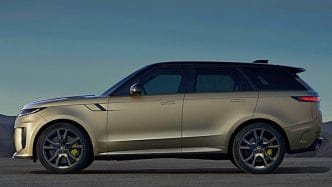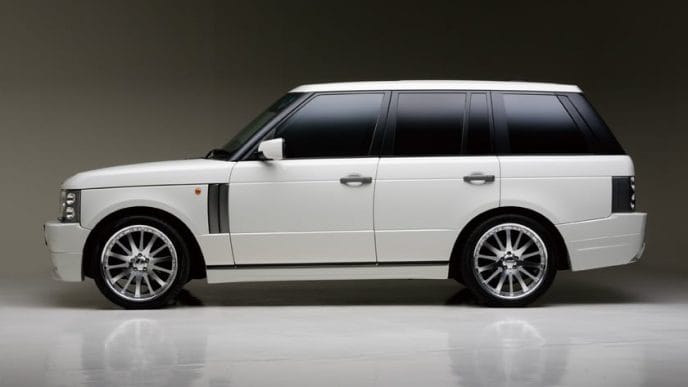





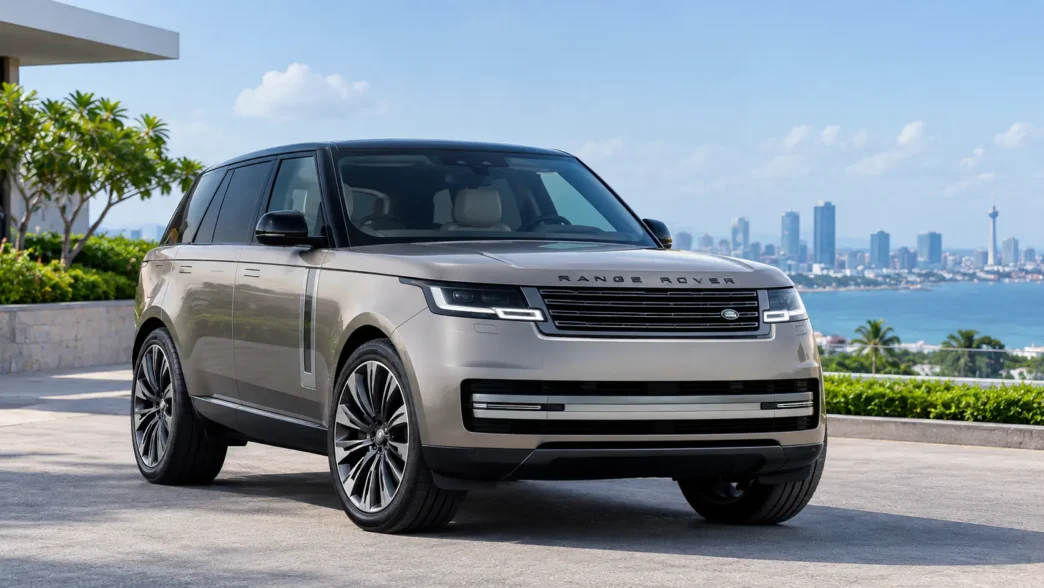
For decades, the Range Rover has represented a particular idea of luxury: effortless performance, exceptional comfort, advanced technology and the ability to travel far beyond ordinary roads.
Now, that formula is entering a new era.
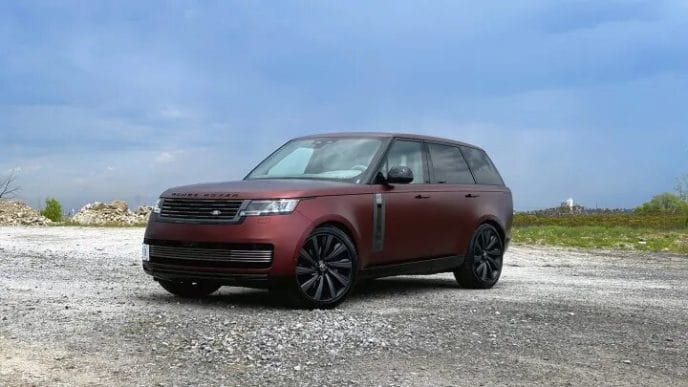
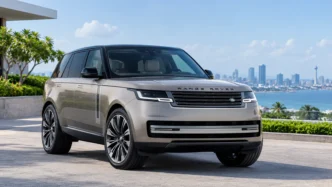
The Range Rover Electric brings fully electric power to the original luxury SUV concept. But this is not simply a Range Rover with a large battery underneath. It has been engineered to deliver the quietness, performance and refinement expected from a Range Rover while retaining the capability that has defined the name for generations.
For Sri Lankan luxury SUV enthusiasts, the interesting question is therefore not simply whether the Range Rover Electric is an EV. It is whether an electric powertrain can actually make the Range Rover experience better.
The First Fully Electric Range Rover
The arrival of the Range Rover Electric represents one of the biggest changes in the model’s history.
Instead of replacing the character of the Range Rover with a completely different EV philosophy, the approach is much more familiar. The design remains recognisably Range Rover, while the technology underneath changes dramatically.
The official model uses a large battery and twin electric motors, delivering up to 550PS and 850Nm of torque. That means the electric version isn’t being positioned as a slower or more practical alternative. It is designed to provide serious performance while making the driving experience quieter and smoother.
For readers who have been following the development of the vehicle, our earlier article on Range Rover Electric production in September 2026 provides more background on its production plans and what they could mean for Sri Lankan buyers.
550PS and 850Nm of Instant Electric Performance
One of the biggest differences between the Range Rover Electric and a conventional petrol-powered model is the way power is delivered.
An electric motor does not need to build revs before producing its torque. The result is immediate acceleration and a very smooth power delivery.
Range Rover says the Electric can achieve 0–60 mph in as little as 4.3 seconds, depending on specification. More importantly, the vehicle’s electric motors can provide up to 850Nm of torque.
That could be particularly useful in situations familiar to Sri Lankan drivers.
Think about merging onto an expressway, overtaking on an open road, or climbing a steep section around the hill country. Instead of waiting for a petrol engine and transmission to respond, the electric powertrain can deliver its performance almost immediately.
But the most impressive part may not be the speed.
It is how quietly that speed arrives.
A Quieter and More Refined Luxury SUV
Luxury isn’t always about having more power.
Sometimes it is about removing things that disturb the experience.
Engine vibration, exhaust noise and transmission shifts are all reduced or eliminated with an electric powertrain. Range Rover has used this opportunity to make the cabin even more focused on quietness and comfort.
The company describes the Range Rover Electric as its quietest Range Rover yet, combining near-silent propulsion with drivetrain isolation and acoustic laminated glass.
For someone driving through Colombo traffic, this could be one of the vehicle’s biggest advantages.
Imagine sitting in heavy traffic along Galle Road or around Rajagiriya without the constant vibration and engine noise associated with a conventional luxury SUV. The electric drivetrain could make an already comfortable cabin feel even more relaxing.
That is an important distinction.
The Range Rover Electric isn’t simply trying to be an environmentally conscious SUV. It is using electrification to improve one of the most important characteristics of a luxury vehicle: refinement.
Up to 600km of Electric Range
Range anxiety remains one of the biggest concerns surrounding electric vehicles.
For a large luxury SUV, the question becomes even more important because the vehicle is likely to be used for both daily commuting and long-distance travel.
The Range Rover Electric is officially rated for up to 600km of WLTP range, while Land Rover Sri Lanka lists an estimated real-world range of around 537km. Actual range will vary depending on speed, temperature, road conditions, driving style, vehicle load and other factors.
For a Colombo-based owner, that could mean several days of normal driving without needing to recharge.
However, Sri Lankan driving conditions are different from controlled laboratory testing.
Heavy traffic, air-conditioning, high temperatures, hill climbs and highway speeds can all affect EV range. Therefore, the 600km figure should be treated as a certified comparison figure rather than a guarantee of what every Sri Lankan driver will achieve.
That is why real-world planning will remain important.
Fast Charging Makes Long Journeys More Practical
Charging technology is another area where the Range Rover Electric aims to reduce the compromises associated with EV ownership.
The vehicle uses an 800V electrical architecture and can charge from 10% to 80% in approximately 22 minutes when connected to a suitable 350kW DC rapid charger. Range Rover says that up to 220km of range can be added in 10 minutes under the appropriate conditions.
This changes the way you might think about an electric road trip.
Instead of waiting for a full battery, a driver could potentially stop during a longer journey, take a short break and add a significant amount of range.
Of course, the important phrase here is suitable charger.
Charging performance depends on the charging infrastructure available, battery conditions and other factors. Sri Lankan owners therefore need to consider the actual charging network rather than relying only on the vehicle’s maximum technical capability.
Home Charging Could Be the Biggest Advantage
For an EV owner in Sri Lanka, home charging could be more important than public charging.
Land Rover Sri Lanka states that the Range Rover Electric can take around 19 hours from 0–100% using a dedicated 7kW home charger, or approximately 7 hours with a 22kW charger, depending on the installation and conditions.
This makes overnight charging particularly attractive.
A Colombo owner could return home in the evening, plug the vehicle in and start the next morning with a substantially replenished battery.
That is a very different ownership routine from visiting a petrol station.
However, professional home charger installation is an important part of the equation. A buyer should consider the home’s electrical setup, charger installation requirements and daily driving pattern before deciding what charging solution is appropriate.
What About Public Charging in Sri Lanka?
This is where the Sri Lankan market becomes particularly interesting.
The local charging network is growing, and Land Rover Sri Lanka identifies ChargeNET as its recommended public charging partner. The company’s public charging information also highlights in-car navigation that can help drivers locate charging stations and plan routes based on battery state and energy consumption.
For someone travelling from Colombo towards Kandy, Galle or other parts of the country, route planning will therefore become an important part of EV ownership.
The technology may be ready for long-distance travel, but the experience still depends on where suitable chargers are available along the route.
This is one area where Sri Lanka’s EV infrastructure will continue to play an important role in determining how easily luxury EVs can be adopted.
Can the Electric Range Rover Still Go Off-Road?
This is perhaps the question Range Rover enthusiasts will care about most.
Going electric should not mean giving up the capability that made Range Rover famous.
The Range Rover Electric can wade through water up to 900mm, and its Intelligent Torque Management system can adjust torque extremely quickly. The vehicle also retains Range Rover’s Terrain Response approach to different driving conditions.
That makes the Electric particularly interesting for Sri Lanka.
The vehicle isn’t restricted to perfectly paved Colombo roads. It is designed to maintain the capability expected from a luxury SUV when conditions become more challenging.
Whether you’re travelling through the hill country, dealing with wet roads during the monsoon or heading towards more remote destinations, the underlying philosophy remains familiar: luxury and capability should coexist.
Naturally, owners should still understand the limits of any vehicle and avoid treating controlled water-wading capability as permission to drive through unknown floodwater.
From Colombo to the Hill Country: How Would It Fit Sri Lankan Driving?
The Range Rover Electric could have a very different personality depending on where it is driven.
Colombo
In Colombo, its strongest qualities could be refinement and effortless acceleration.
Heavy traffic, frequent stops and short journeys are situations where an EV can make a lot of sense. The quiet powertrain and smooth torque delivery could make daily driving considerably more relaxed.
Colombo to Kandy
Longer journeys introduce another consideration: charging.
The range should make many longer trips practical, but owners will need to consider their starting battery level, route and available charging options.
Nuwara Eliya and the Hill Country
The hill country provides a different test.
Electric motors are naturally well suited to delivering instant torque, while regenerative braking can recover some energy during deceleration. However, elevation, temperature, road conditions and driving style can influence overall energy consumption.
This means the Range Rover Electric could be technically capable of the journey, but smart energy planning will still matter.
The Electric Range Rover Is Still About Luxury
Perhaps the most important thing about this vehicle is that Range Rover has not abandoned its traditional identity.
The cabin remains focused on premium materials, comfort and a calm environment. The lack of engine noise actually supports this philosophy rather than working against it.
This is also where the electric Range Rover differs from simply buying any premium EV.
The goal is not just efficiency.
It is to combine electric performance, luxury, technology and all-terrain capability in one package.
For Sri Lankan buyers who are already familiar with the Range Rover experience, that continuity could be more important than the electric badge itself.
What About the Price?
The Range Rover Electric sits firmly in the luxury segment, so purchase price will remain an important consideration in Sri Lanka.
Import duties, taxes, specifications, exchange rates and local availability can all affect the final cost. Rather than relying on a single headline figure, potential buyers should look at the broader financial picture.
Our Range Rover Sri Lanka Price Guide 2026 provides a broader look at Range Rover pricing and ownership considerations in the local market.
The electric model should therefore be viewed as a premium technology purchase, not simply a cheaper alternative to a petrol Range Rover.
Maintenance Will Also Change
Electric vehicles have fewer traditional mechanical components than petrol-powered vehicles, but that does not mean maintenance disappears.
A luxury EV still contains sophisticated electronics, suspension systems, tyres, cooling systems and other components that require proper care.
For anyone researching long-term Range Rover ownership, our guide to Range Rover Parts in Sri Lanka provides useful background on the local parts and servicing environment.
For the Electric specifically, battery health, high-voltage systems and specialist diagnostics will become increasingly important areas of ownership.
A New Era Without Losing the Range Rover Identity
The biggest achievement of the Range Rover Electric may not be its 600km range, 550PS output or rapid charging capability.
It may be the fact that Range Rover has managed to move into electric power without abandoning what made the brand desirable in the first place.
It remains large, luxurious, quiet, capable and technologically advanced.
The difference is that its performance now arrives with the instant response and near-silent character of an electric powertrain.
For Sri Lankan drivers, there are still practical questions around charging infrastructure, local availability and total ownership cost. But the technology itself is becoming increasingly convincing.
Conclusion
The Range Rover Electric represents more than another electric SUV entering the luxury market.It shows how an established luxury brand can transition to electric power without completely changing its identity. With up to 600km of certified range, 550PS, 850Nm of torque, 800V charging technology, rapid DC charging and 900mm water-wading capability, it combines the advantages of electrification with the characteristics Range Rover owners already expect.
For Sri Lankan enthusiasts, the real question now is not whether Range Rover can build an electric SUV. It clearly can. The more interesting question is how quickly Sri Lanka’s charging infrastructure, ownership ecosystem and luxury vehicle market will adapt to it. And if those pieces come together, the Range Rover Electric could prove that the future of the luxury SUV doesn’t have to look completely different. It can simply become quieter, faster and more refined.
Frequently Asked Questions (FAQ)
How much range does the Range Rover Electric have?
The Range Rover Electric has a certified range of up to 600km WLTP, while Land Rover Sri Lanka lists an estimated real-world range of around 537km. Actual range depends on driving conditions, speed, temperature, load and other factors.
How powerful is the Range Rover Electric?
The Range Rover Electric produces up to 550PS and 850Nm of torque through its twin electric motors.
How long does it take to charge?
Using a suitable 350kW DC rapid charger, the Range Rover Electric can charge from 10% to 80% in approximately 22 minutes. Land Rover says up to 220km of range can be added in 10 minutes under suitable conditions.
Can the Range Rover Electric handle Sri Lankan roads?
Yes. It retains Range Rover’s focus on all-terrain capability and can wade through up to 900mm of water. However, drivers should still adapt their driving to local road, weather and flooding conditions.
Is the Range Rover Electric better than the PHEV for Sri Lanka?
It depends on the owner’s lifestyle. The fully electric model offers a quieter and more advanced EV experience, while the PHEV provides the additional flexibility of a petrol engine for longer journeys. Home charging access and typical travel patterns should be considered before choosing between them.